
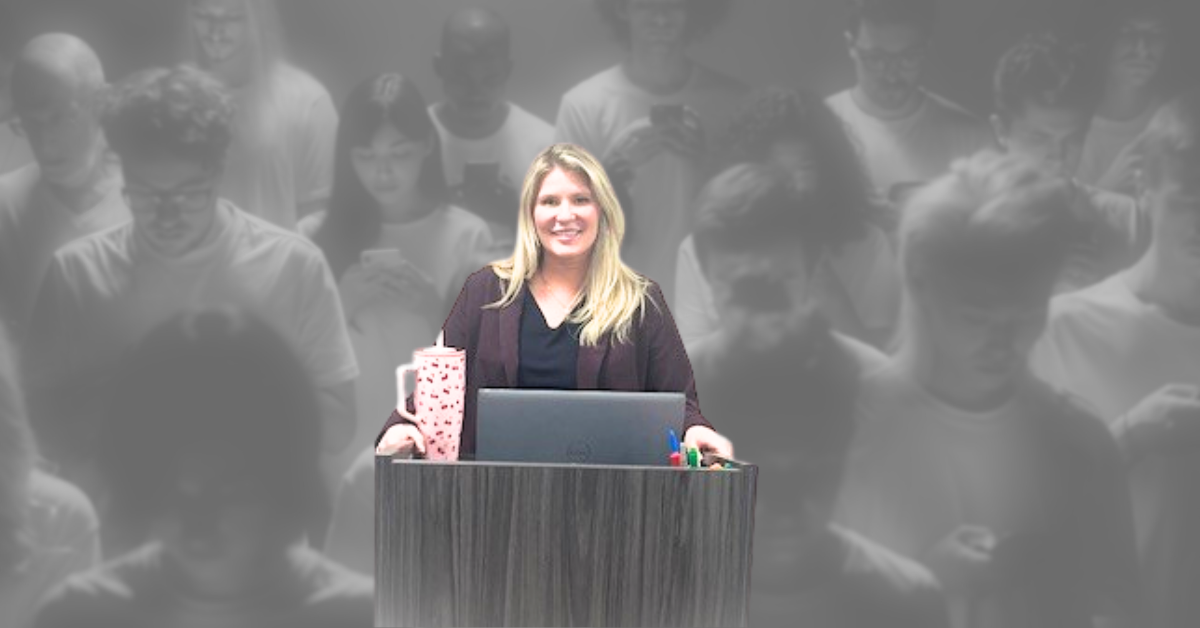
Human trafficking is often imagined as something distant – dark basements, chained victims, dramatic rescues. But according to Heather Land, Learning and Development Facilitator at the University of South Florida School of Social Work, that image couldn’t be further from reality.
In this conversation, Heather draws from more than a decade in child welfare to explain what human trafficking actually looks like, why foster youth are especially vulnerable, and how community awareness and not myths, can save lives.
From Child Welfare to Human Trafficking Training
Heather’s journey into human trafficking prevention began in child welfare, where she worked directly with children who had experienced significant trauma. Her first role was as a house parent at a group home for teenage girls. What she witnessed there, particularly how children described their experiences with the system, sparked a desire to make removals and investigations less traumatic.
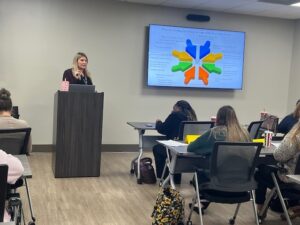
She spent eight years as a Child Protective Investigator (CPI) before transitioning into case management, and eventually into training. Today, Heather trains FSS social workers and case managers on human trafficking, helping them become fully certified case managers through the Florida Certification Board after completing rigorous supervision and field observation requirements.
What drew her specifically to human trafficking?
“I hate the topic because it’s disgusting,” she says candidly, “but I’m fascinated by it. When the opportunity came up to be trained, I jumped on it.”
Burnout, resilience, and gratitude in Child Welfare
Child welfare is known for burnout, but Heather credits gratitude, faith, and strong supervision for sustaining her career.
“There are very few days I haven’t felt gratitude being in this position,” she explains. “Once I started this work, I realized there was no bigger impact I could make for kids who’ve experienced trauma.”
She also emphasizes the importance of supportive leadership and peer relationships. Many of her closest friendships began in child welfare as relationships were forged through shared stress, long hours, and emotionally heavy cases.
Her eventual transition into training came after becoming a parent. Fieldwork left little room for balance, and she realized she was missing milestones in her son’s life. Training allowed her to remain connected to the mission while regaining family stability.
The biggest misconceptions about Human Trafficking
Heather identifies several widespread misconceptions:
- It only happens to girls
- It doesn’t happen in “our” community
- It always involves physical restraint or violence
In reality, trafficking often looks like a relationship. Sometimes even a loving one on the surface.
“The image people have comes from movies like Taken,” Heather explains. “But what we see is far more dynamic and far more hidden.”
Trafficking can happen entirely online, without the child ever meeting their trafficker in person.

Familial trafficking and the role of Social Media
One of the most alarming trends Heather discusses is the rise of familial trafficking, particularly facilitated by social media.
Contrary to common belief, the primary trafficker in familial cases is often the mother, not a boyfriend or father. Some cases begin with parents selling images or clothing online, escalating into videos and eventually access to the child.
Platforms like Instagram, TikTok, Roblox, Discord, and YouTube are commonly used. Heather stresses that there are no “bad apps”. Any platform with a chat function can be exploited.
Why Foster Youth are prime targets
Children in foster care are especially vulnerable because traffickers prey on unmet emotional needs.
“A child longing for connection is the easiest child to manipulate,” Heather explains.
One common method is known as “Romeo trafficking,” where traffickers build trust by offering love, belonging, or a false sense of family. These emotional bonds make disclosure and escape extremely difficult.
Online Grooming, Sextortion, and alarming statistics
Heather shares statistics that illustrate the scope of online exploitation in the U.S.:
- 1 in 3 children consider someone they met online one of their closest friends
- 1 in 14 knowingly interact online with someone they believe is 30 or older
- 40% of children report being solicited for nude images
- 66% of minors report sharing self-generated sexual images with someone they’ve never met
This content is now referred to as Child Sexual Abuse Material (CSAM), replacing outdated and misleading terms.
Heather also explains sextortion, where traffickers threaten to expose images unless children comply with further demands, sometimes escalating into live-streamed abuse involving multiple perpetrators.
The Trauma Bond and why “rescue” isn’t enough
One of the most misunderstood aspects of trafficking is recovery.
“There’s this belief that rescue equals healing,” Heather says. “But most kids want to go back to their trafficker.”
The trauma bond between survivor and trafficker is often stronger than outsiders realize. Many children don’t even identify as victims, believing they were in consensual relationships.
This contributes to trafficking having the lowest disclosure rate of all forms of maltreatment.
Survivor Advocates: Essential but scarce
Survivor advocates – individuals with lived experience – are often the only people who can truly break through to trafficked youth. However, Heather notes a severe shortage, with advocates carrying overwhelming caseloads.
She also warns against exploiting survivors’ stories for awareness efforts without offering genuine, ongoing support.
“We have to be careful not to re-traumatize them,” she says. “They’re more than their testimony.”
What the community can do
Trafficking happens in plain sight—at grocery stores, gas stations, parks, schools, and hotels.
“If we don’t talk about what trafficking really looks like, we’re never going to stop it,” Heather emphasizes.
Human trafficking thrives in silence and misunderstanding. Awareness of real warning signs, not stereotypes, can save lives. If something feels wrong, community members can contact non-emergency law enforcement. You don’t need proof, just concern.
What needs to change in the next 5–10 years
If Heather could change one thing, it would be this: End victim blaming.
Trafficked children are often labeled as “choosing” their situation, when in reality they’ve been groomed, manipulated, and stripped of alternatives.
“These kids already carry so much shame,” she says. “Blaming them keeps them trapped in shame. Understanding opens the door to healing.”
She also points out a sobering fact:
In Florida, children under 18 could still be arrested for prostitution until 2016.
“That should shock everyone,” she says.
Final Thoughts
Human trafficking isn’t rare, distant, or obvious. It’s complex, relational, and deeply rooted in unmet needs and societal blind spots.
You can help. Sometimes trusting your instinct can make a difference. Florida Human Trafficking Hotline: 1-855-352-7233 and National Human Trafficking Hotline: 888-373-7888.





0 Comments