
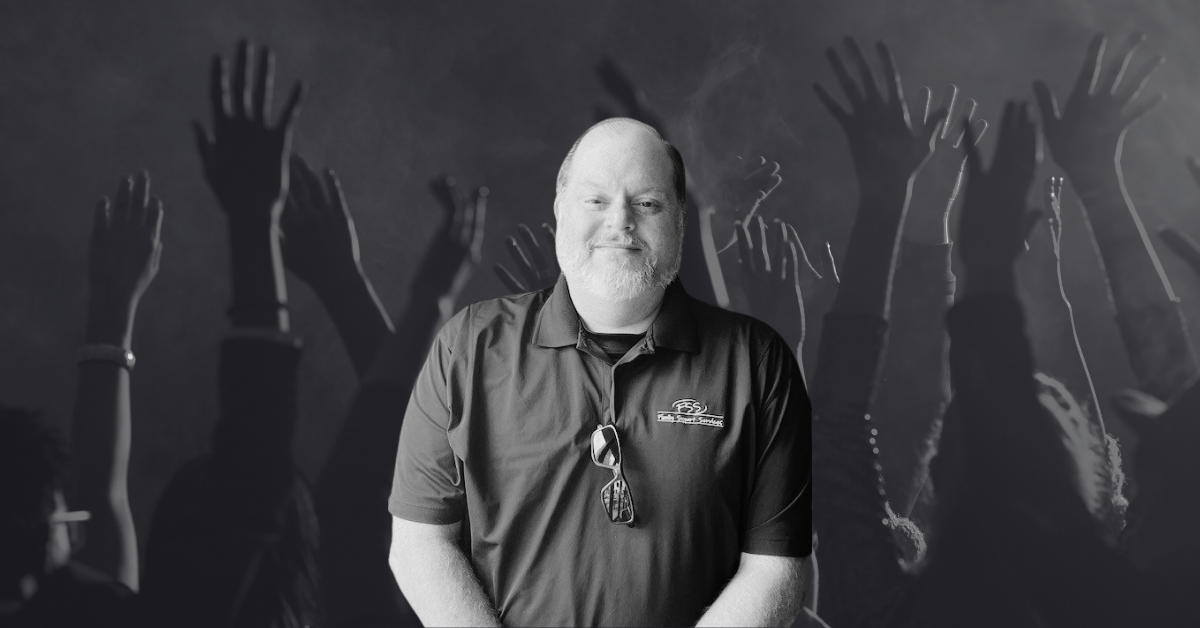
As Human Trafficking Prevention Month shines a light on an often-hidden crime, Andrew Rodriguez of Family Support Services explains how children are found, why victims rarely speak, and what communities can do to help.
By the time a missing child is recovered, the story is rarely simple.
For Andrew Rodriguez, Missing Child Specialist and Human Trafficking Liaison with Family Support Services (FSS), that reality has defined much of his career. January’s designation as Human Trafficking Prevention Month offers an opportunity not only to acknowledge the scale of the problem, but to better understand the people working behind the scenes to protect vulnerable youth and the realities they confront every day.
Rodriguez has spent more than 16 years in child welfare, including over a decade as a Child Protective Investigator (CPI). That experience, combined with human trafficking certification, positioned him for a role that has steadily expanded as the scope of the crisis has become clearer.
“A lot of this work happens behind the scenes,” Rodriguez said. “Human trafficking is still something people don’t want to talk about.”
From temporary assignment to specialized role
Rodriguez joined the local lead child welfare agency, Eckerd Community Alternatives; now Family Support Services, as a family finder. Less than a week later, he was asked to temporarily cover missing-children cases after a staff departure. What was supposed to be a short-term solution became permanent.
“I remember thinking, why would you train me just so I can train someone else?” he said. Instead, the role grew. Over time, Rodriguez became the agency’s Missing Child Specialist, with added responsibilities as a liaison for human trafficking cases involving law enforcement, service providers, and community partners.
Today, his work intersects with some of the largest child recovery operations in Florida.
Large-scale operations, real outcomes
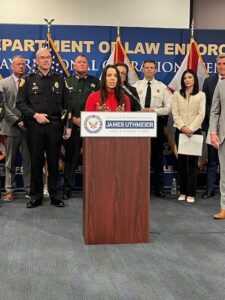
In the past year alone, Rodriguez has participated in multiple multi-agency recovery operations with the U.S. Marshals Service, the FBI, state prosecutors, and local law enforcement agencies. These operations are not focused exclusively on trafficking, but on locating missing and endangered children – many of whom are later found to be trafficking victims.
One such effort, Operation Seminole Saber in spring 2024, resulted in the recovery of 27 children across Pasco, Pinellas, and Hillsborough counties. Of those, eight to ten had confirmed or suspected trafficking involvement. Later that year, Operation Dragon Eye recovered 60 children, with approximately 20 to 25 identified as having trafficking indicators.
The most recent operation, Home for the Holidays conducted statewide in late October and early November, recovered 122 children. Four command posts were established across Florida, and some youth were located as far away as Mexico and Guatemala.
“We’d be happy if we got five kids back,” Rodriguez said. “So when that number kept climbing past 100, it was overwhelming – in the best way.”
What has changed, he explained, is the level of coordination. Survivor mentors, prosecutors, nonprofits, and child welfare professionals now work so closely together that services can be activated immediately.
Why victims rarely speak
One of the greatest challenges in trafficking cases is disclosure. Even when children are recovered from active trafficking situations, many refuse to talk.
“Fear is everything,” Rodriguez said. Traffickers groom their victims, threaten family members, and use explicit photos or videos as leverage. Victims are often convinced that silence is the only way to stay safe.
This reality means law enforcement frequently must rely on surveillance, witness accounts, and corroborating evidence, rather than victim testimony, to make arrests.
“Most people don’t want to believe this is happening,” Rodriguez said. “But it is.”
Not what the movies show
Rodriguez is quick to dispel common myths about human trafficking. It is rarely a dramatic abduction by a stranger. Instead, it often begins with attention, affection, or perceived support.

Increasingly, those connections are made online. Social media platforms, gaming apps, and even smart TVs have become tools for traffickers to reach children without ever meeting them face-to-face.
The risk is not confined to any one demographic.
“Lower income, middle class, upper class – it doesn’t matter,” Rodriguez said. “Anyone can be vulnerable.”
Foster youth at higher risk
Foster youth are particularly susceptible. Traffickers know they are more likely to run and may already feel unwanted or disconnected.
“We see it all the time,” Rodriguez said. “These kids already believe nobody cares. That makes them easy targets.”
Some traffickers even position themselves near group homes or foster placements, waiting for youth to run.
Recovery Is not one-size-fits-all
Once a child is recovered, the path forward varies widely. Survivor mentors, individuals with lived experience of trafficking, are often among the most effective supports.
Rodriguez points to mentors like Kim Figueroa, who was visibly involved during Operation Dragon Eye. Her ability to build trust, he said, is unmatched.
“She doesn’t give up,” he said. “She’ll sit with a kid as long as it takes.”
Safe homes are another critical resource, but availability is limited. Florida has only 20 to 25 safe-home beds statewide for trafficking survivors, and youth must agree to placement. A challenge when rules include surrendering phones or limiting outside contact.
Despite the obstacles, Rodriguez has witnessed remarkable turnarounds. One young woman, trafficked for years, entered a safe home at 18 and completely changed course: earning her GED, getting her driver’s license, and planning a future in nursing.
“Those are the cases that keep you going,” Rodriguez said.
The emotional toll
The work is demanding, and burnout is common in child welfare. Rodriguez acknowledges becoming “jaded” over time but emphasizes the importance of peer support. Law enforcement officers, survivor mentors, prosecutors, and child welfare staff often rely on one another to process the emotional weight of the job.
At home, Rodriguez focuses on drawing clear boundaries.
“Once I punch out, I shut my brain off,” he said. “Then I go be a dad.”
What communities can do
For Rodriguez, prevention starts with awareness.
“If something feels off, report it,” he said. “It might be nothing – but it might be something.”
He encourages residents to pay attention to their surroundings and resist the instinct to look away.
Human trafficking, he noted, has existed in some form throughout history. What has changed is its visibility and its reach.
“If people are willing to notice the signs and speak up,” Rodriguez said, “we have a chance to stop it sooner.”
If you see something, say something. Florida Human Trafficking Hotline: 1-855-352-7233 and National Human Trafficking Hotline: 888-373-7888.



0 Comments