
For January Human Trafficking Prevention Month, we cover stories and experiences from our staff and beyond to raise awareness of human trafficking in our communities.
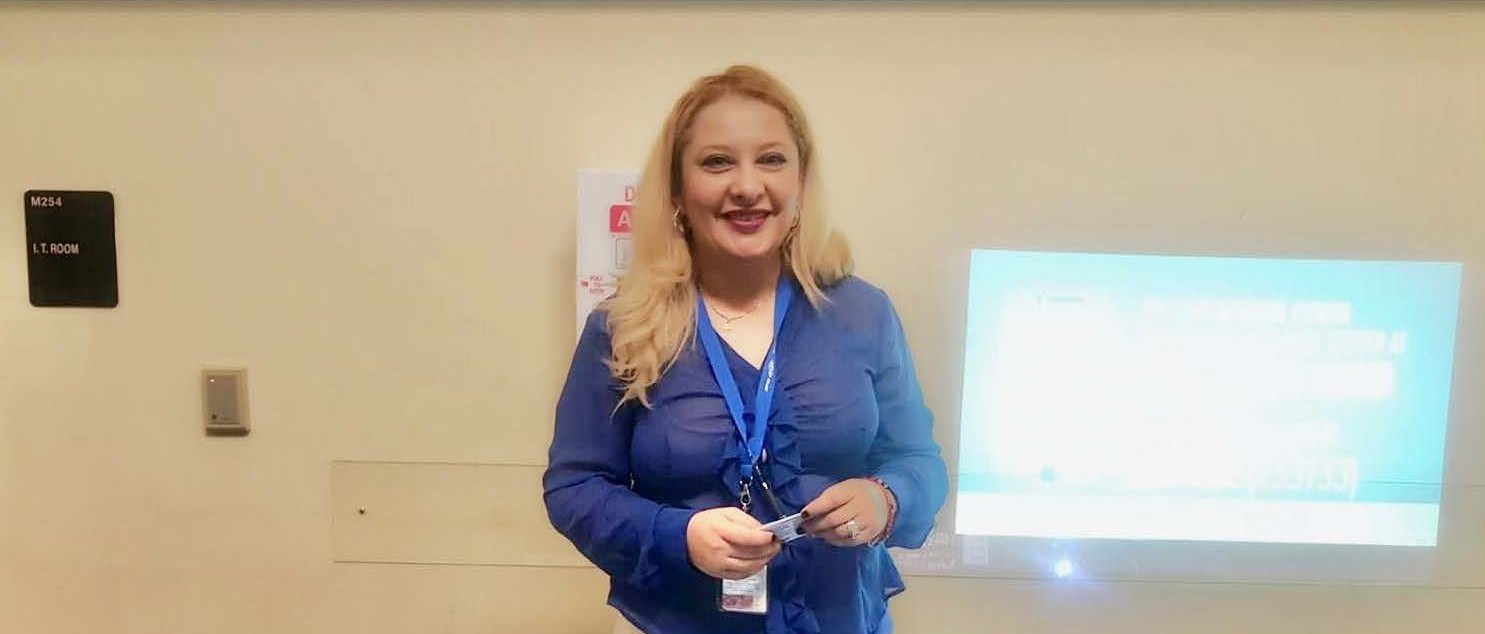
Adriana Rodriguez, Kinship Specialist, Family Support Services
When you think of public transportation, you may not immediately think of it as a battleground against human trafficking. But for Adriana, a former risk coordinator at a major transit authority, buses became a lifeline, moving witnesses, safe havens, and sometimes the only escape route for victims.
Her journey into anti-trafficking advocacy began not in a formal role, but through a growing awareness. Adriana, whose background includes leadership roles with the Boys & Girls Club across diverse neighborhoods, began noticing something disturbing: a deep lack of public understanding about human trafficking. Many dismissed it as an issue that only affected immigrants or minorities. That ignorance wasn’t just frustrating -it was dangerous.
“People think human trafficking is only about sex or immigrants. But it’s global, it’s local, and it doesn’t discriminate.” She says.
When Adriana pitched her first initiative at the transit authority, she was met with resistance. Some believed it wasn’t relevant to their ridership. Others thought it was “just a minority problem.” But Adriana persisted. Using her own time and resources, she developed a comprehensive training program for bus drivers, complete with bilingual materials, posters, and brochures. She called it “The Eyes of the City.”

Why the Eyes of the City?
Because buses don’t just carry people – they observe cities. With onboard cameras and regular routes, drivers are uniquely positioned to notice patterns, red flags, and changes in behavior that others might miss. Adriana’s goal was to equip them with the tools to recognize victims and safely report suspicious activity.
And it worked.
Drivers learned that they could discreetly notify law enforcement without confrontation. Bus stops and buses became designated safe spaces where victims could seek help. One driver, trained by Adriana, safely transported a terrified girl being followed by a potential abductor – without alarming the suspect. Another recognized the signs of distress in a young woman offering sex in exchange for fare and sought help rather than turning her away.

Educating Against Stereotypes
Adriana also battled against the harmful myths surrounding trafficking. She emphasized that:
- Victims come from all backgrounds – children, adults, citizens, immigrants.
- Trafficking includes labor exploitation, forced marriage, organ trafficking, and domestic servitude, not just sex work.
- Males, children, the elderly, and those with disabilities can also be victims.
She recounted real cases where children in wheelchairs or individuals with autism were exploited for sex trafficking. Or where individuals had organs removed without their knowledge or consent.
“They were using disabled kids and people in wheelchairs. People think that’s fiction – it’s not.”
The Hidden Resistance
Despite her success, Adriana faced challenges with leadership, and their hesitancy to publicize the program. There was fear it would affect high profile events and “scare tourists”. But she never let that stop her. She trained hundreds of drivers across states, spoke at religious and community events, and partnered with organizations like Homeland Security’s Blue Campaign and Truckers Against Trafficking (TAT).
Watch TAT training video featuring a former human trafficking victim sharing her experience here.
She also included a crucial, often overlooked tool in her training: empathy.
“I told them, what if that missing child on the poster was your niece? Your nephew? Wouldn’t you want someone to care enough to notice?”
Beyond the Bus
Although Adriana has since left the transit authority, she continues her work. She speaks at churches, trains community leaders, and collaborates with the Mexican consulate. Her mission now is about empowering people with the knowledge to spot trafficking and encouraging them to report it, even if they’re unsure.
She remains active, but cautious. After experiencing attempts to erase her contributions, she prefers to stay out of the spotlight. Still, her impact speaks volumes.
A Final Word
Adriana always ended her trainings with a quote from Dr. Martin Luther King Jr.:
“Our lives begin to end the day we become silent about things that matter.”
Human trafficking is not a seasonal issue or a headline of the week. It’s happening in our neighborhoods, on our streets, and sometimes on our buses. And thanks to people like Adriana, more eyes are open, watching – and protecting.
If you see something, say something. National Human Trafficking Hotline: 888-373-7888.



0 Comments